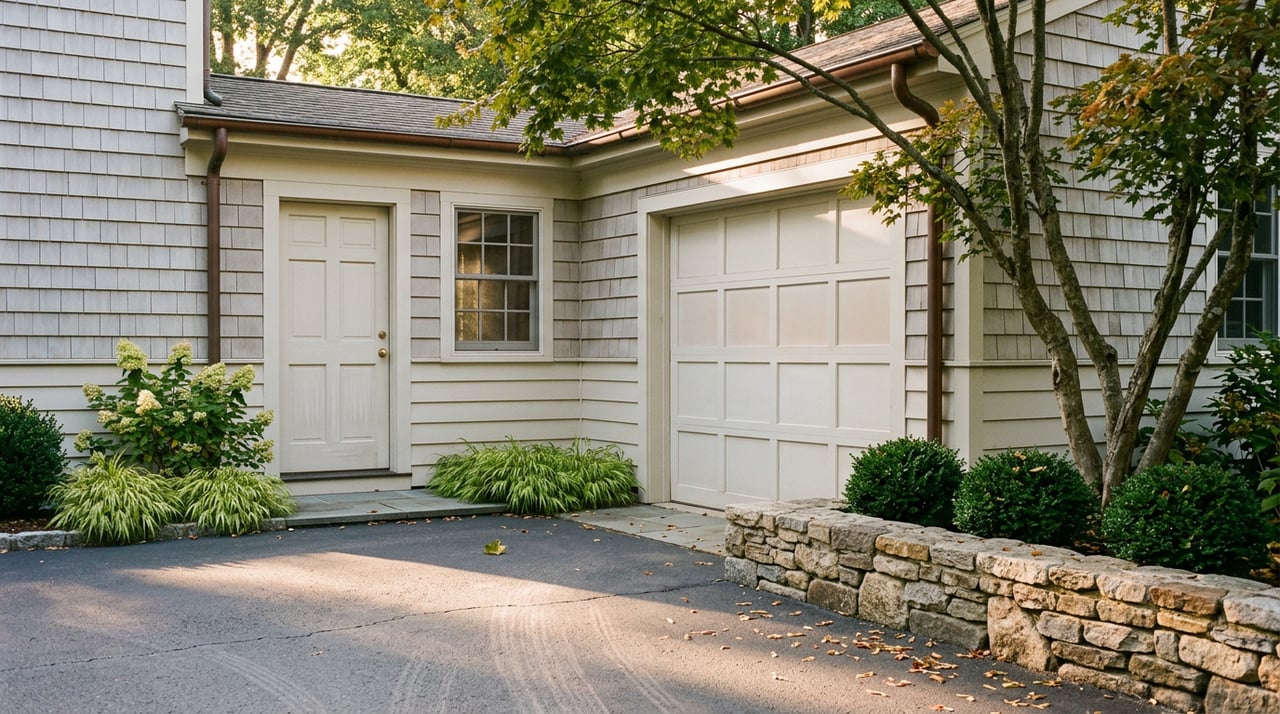
A buyer client called me last month, thrilled about a house in Rowayton priced within two thousand dollars of a comparable listing in West Norwalk. Same beds, same baths, similar lot, similar year built. They wanted to know if the Rowayton house was the better deal because the yard was slightly bigger. The honest answer had nothing to do with the yard. It had to do with a line on a 1921 charter map that neither address broadcasts, neither Google Street View shows, and neither listing agent had mentioned in the remarks.
Norwalk is not one tax jurisdiction. It is six. And in the last sixty days, every one of them raised the rate.
The Six Lines That Don't Show Up On A Listing
When South Norwalk and Norwalk merged in 1921, the deal preserved the old service boundaries as taxing districts inside the new city. At the turn of the last century, South Norwalk and Norwalk were separate cities, and in the 1921 merger South Norwalk became the Second Taxing District, Norwalk became the First District, East Norwalk the Third, and Rowayton the Sixth. A century later, that legacy is still on your closing statement.
If a parcel sits inside one of these districts, the owner pays the citywide mill rate plus a district levy for services the city does not provide there. In Rowayton, the Sixth Taxing District oversees garbage and leaf pickup, street lighting, funds the Rowayton Library and Rowayton Fire Department, and maintains Pinkney Park, Bayley Beach, the Rowayton Community Center, the Rowayton Arts Center, and the train station and its parking lot. When a Rowayton homeowner pays property taxes, roughly 5% goes to the Sixth Taxing District and the remaining 95% goes to the City of Norwalk.
That 5% is not the story. The story is that districts each set their own rate, on their own budget cycle, on top of the city rate. Two homes at the same list price on opposite sides of a district line produce two different monthly carrying costs. The MLS remarks do not tell you this. The photos do not tell you this. Only the last tax bill does.
What Just Changed On July 1
Norwalk's Board of Estimate and Taxation officially approved mill rates for the fiscal year beginning July 1, 2026, with homeowners across all six taxing districts facing increases of roughly 3% over last year, lower than what the mayor's office originally proposed. Those increases are considerably smaller than the mayor's February proposal, which showed mill increases of 3.8% to nearly 4.9% across most districts.
Three percent sounds small. Layered onto an assessment that is itself climbing, it isn't.
Here is the mechanism most buyers miss. The Board of Estimate and Taxation approved a four-year phase-in for property tax increases from the 2023 Grand List revaluation, designed to help residents adjust gradually; if a home was valued at $500,000 in 2022 and its post-revaluation value is $680,000, the $180,000 gain is spread across four annual increments. The July 2026 bill reflects Year 3 of that phase-in. The assessment goes up automatically, and the mill rate went up on top of it.
Norwalk's 2023 revaluation captured property values before another wave of appreciation, and per Zillow, the median home value climbed from roughly $550,000 in 2023 to $671,000 as of early 2026, around 22% growth. A portion of that appreciation still has not landed on tax bills. It will.
What The Districts Actually Do
| District | Common name | Character of levy |
|---|---|---|
| First | Norwalk | Base city services only |
| Second | South Norwalk | Historic district services |
| Third | East Norwalk | Local sewer and improvement district |
| Fourth | Central/South | Sewer service area |
| Fifth | Central | Local service area |
| Sixth | Rowayton | Fire, library, parks, garbage, community center, train lot |
The Sixth is the most talked-about because Rowayton feels like its own village and the levy funds visible amenities. The others are quieter. That does not make them equal. The tax bill increase from FYE 2025 to FYE 2026 by district ranged from a low of 8.36% in the 5th Taxing District to a high of 14.65% in the 2nd Taxing District, driven by year two of the four-year revaluation phase-in and a shift in the Grand List from commercial to residential properties. That is a six-point spread on the same city, in the same year. The median-price headline hid all of it.
Doing The Math On A $749,000 House
In June 2026, Norwalk homes were listed to buy for a median price of $749K. Take that number as a starting point and run it through the mechanism.
Connecticut assesses real estate at 70% of market value, so a $749,000 home carries an assessed value of roughly $524,300. A mill rate of 23 means the tax equals $23 for every $1,000 of assessed property value, and the assessed value of real estate is 70% of the property's market value.
At a combined rate of 24 mills, that home's annual property tax is about $12,583. At 26 mills, it is about $13,632. Two points of mill difference is roughly $1,050 a year, or $87 a month, on identical price. On a jumbo-adjacent mortgage where the debt-to-income ratio is tight, $87 a month can move a pre-approval by the size of a small kitchen renovation. On a listing that has been sitting for the 18-day median days-on-market Norwalk is showing right now, it can be the difference between a full-price offer and a strategic reduction.
If you are pricing a listing from comps that sit in a different taxing district than yours, you are pricing off someone else's carrying cost, not yours. The buyer's lender is looking at both.
The Motor Vehicle Wrinkle
A recent state rule pulls a second thread through this. A state legislative change requires the motor vehicle mill rate to be less than or equal to the lowest district real-estate mill rate; the board set the FY26 motor vehicle rate at 22 to remain below the lowest district rate, District 6 at 22.3924. Two years ago the motor vehicle mill rate was 32.46, last year it was set at 22 mills, and this year it is 22.95 mills.
The residual effect matters when you compare Norwalk to neighbors. The result of an increased assessment and an increased mill rate is a tax increase, and most real estate taxpayers will see their real estate tax bill increase more steeply this year than in some prior years, driven by the combination of higher assessed values due to the phase-in and higher real estate mill rates tied to the reduction in the motor vehicle mill rate. Some neighboring towns went the other direction on rates this cycle. Greenwich is proposing a reduction from 11.59 mills to 10.12 mills, and Bridgeport's mayor has proposed lowering the city's rate from 43.45 to 27.75. Norwalk went up. If a relocation buyer is comparing towns on a spreadsheet, the direction of travel matters as much as the number.
Questions To Ask Before You Write The Offer
Before you sign anything on a Norwalk property, get answers to these. Your attorney or your agent should be able to pull them in a day.
- Which of the six taxing districts does the parcel sit in, confirmed against the Norwalk Tax Assessor's parcel record, not the listing sheet.
- What is the combined mill rate for that district in the current fiscal year, and what was it last year.
- What is the current assessed value, and which year of the four-year phase-in is it on.
- Are there special assessments, district user charges, or sewer fees on the last bill that will carry over.
- If Rowayton is in play, contact the Sixth Taxing District directly for the current district levy and any boundary questions on Bell Island or the sewer-served parcels, where the Fourth District overlaps for utility purposes.
For sellers, the same list runs in reverse. If your comps sit in a different district, adjust your list price for the tax-adjusted carrying cost a lender will actually calculate. Do not assume the buyer's agent will do that math kindly.
FAQ
Can two homes on the same street be in different taxing districts? Yes, though it is uncommon on interior streets. District lines follow the old service boundaries, not modern subdivisions. Bell Island and a handful of Sixth District parcels served by sewers have overlapping obligations to the Fourth District for utility service, which is exactly the sort of quirk that only shows up on the tax bill.
Do the district services justify the extra levy? That is a personal call. Rowayton residents pay for and use Bayley Beach, Pinkney Park, and the Rowayton Library directly. If you would use those, the levy is buying services you value. If you would not, you are paying anyway.
Will the phase-in end soon? Year 3 hits in the July 2026 bill. Year 4 lands in July 2027. After that, assessments stop climbing on the phase-in schedule and only move with future revaluations or improvements you make.
Does the FY2027 mill rate change what I should offer? It changes what the property costs to hold, which is what your lender qualifies you on. Whether that changes your offer is a strategy question. It should at least change the number you write in the affordability column of your spreadsheet.
The mechanics are not exotic once you know they exist. The trouble is that they are invisible on every listing photo, every median-price headline, and every out-of-town spreadsheet a relocation buyer builds before their first showing. I read them for a living. If you are getting ready to buy or list in Norwalk this year, I would rather run the district math for you now than see it surface at attorney review.
Schedule your free home consultation and valuation with Marlee Book, and we will pull the parcel record, the current district rate, and the phase-in year on any Norwalk address before you write a number down.